Artificial intelligence is rapidly reshaping the global balance of power — transforming economies, redefining national security, and accelerating geopolitical competition between nations.
As governments and organizations race to secure technological advantage, executives are facing a new era of uncertainty where AI is no longer simply a business tool, but a strategic force shaping diplomacy, warfare, information, and influence.
This webinar, which occurred on June 10, 2026, brings together leading experts to examine how AI is intensifying geopolitical tensions, altering the nature of global conflict, and challenging long-standing assumptions about governance, security, and international cooperation. From the emerging AI rivalry between the United States and China to the growing risks of misinformation, autonomous systems, and technological fragmentation, this discussion will unpack the implications for business leaders navigating an increasingly volatile world.
Access the full recording by filling out the form on the right sidebar.
What you will learn
In this session, you’ll explore:
- Why AI is a geopolitical force, not just a technology: Understand how AI is shifting the balance of power between nations and reshaping the rules of global competition
- The US–China AI rivalry: Examine the accelerating race for AI supremacy, including semiconductor policy, export controls, and the strategic stakes for both sides
- AI and the fog of war: Explore how AI is transforming modern conflict — from autonomous weapons and battlefield intelligence to information operations and hybrid warfare
- Misinformation, influence, and information warfare: Understand how AI-generated content is weaponized to manipulate public opinion, elections, and international narratives
- Technological fragmentation and the splintering internet: Learn how competing national AI ecosystems are creating new risks for global trade, data flows, and multinational operations
- Governance gaps and the limits of international cooperation: Assess where global AI governance frameworks are failing and what leaders should watch
- What this means for executives and organizations: Practical frameworks for navigating geopolitical AI risk in strategy, supply chains, data governance, and investment decisions
Reading ahead
Our featured speaker has written extensively on the intersection of AI and geopolitics. For context ahead of the session, explore her recent analysis in The Globe and Mail:
- “In the age of AI, the fog of war thickens”
- “In the roiling cold war for AI supremacy, the US has let China back in”
Meet your speakers
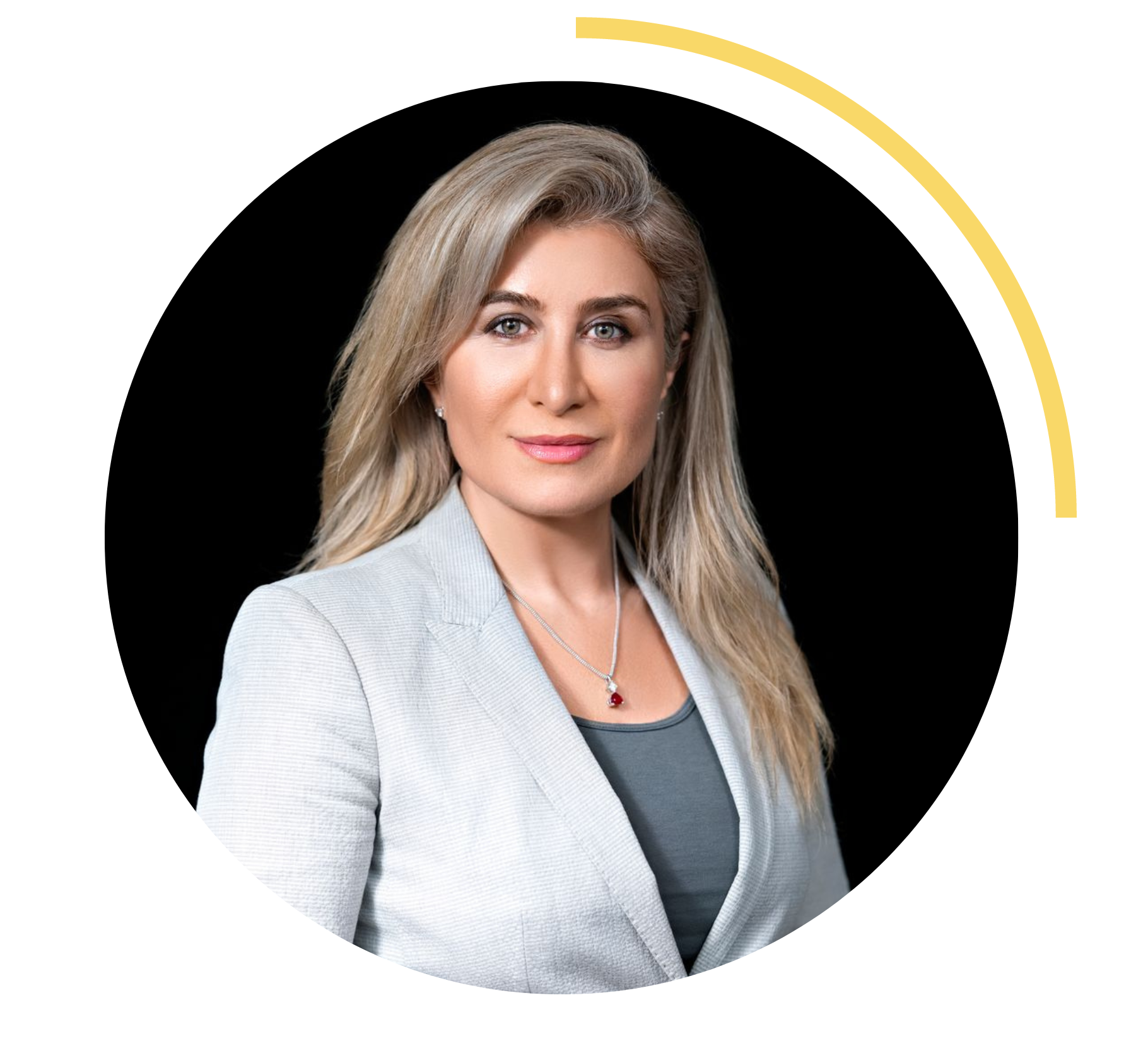
Dr. Bessma Momani
Professor, Political Science, University of Waterloo | Senior Fellow, Centre for International Governance Innovation
Dr. Bessma Momani is a full professor of Political Science at the University of Waterloo, a fellow at the NATO Defence College, and a senior fellow at the Centre for International Governance Innovation (CIGI). She is currently a governor of the International Development Research Council, Advisory Board member on the Canadian International Council, and a Fulbright Scholar. She was associate vice-president in Waterloo's Office of Research for five years, a non-resident senior fellow at both the Brookings Institution and Stimson Center in Washington D.C., a consultant to the International Monetary Fund, a visiting scholar at Georgetown University's Mortara Center, and a 2015 Fellow of the Pierre Elliott Trudeau Foundation.
She also formerly sat on the National Security Transparency Advisory Group (NS-TAG) to advise the Deputy Minister of Public Safety Canada and other Government officials on improving transparency on Canada's national security and intelligence departments and agencies. Momani is a frequent contributor to international media on international affairs and writes regular op-eds in The Globe and Mail.

Dr. Samantha Bradshaw
Director, Center for Security, Innovation & New Technology; Assistant Professor | American University's School of International Service
Dr. Samantha Bradshaw is the director of the Center for Security, Innovation & New Technology and an assistant professor at American University’s School of International Service.
Her scholarship uses computational and qualitative methods to study technology’s impact on geopolitics and governance, with expertise in disinformation, online trust and safety, and emerging technologies.
She has led global research on statebacked information operations, platform governance, and the security implications of AI and quantum computing. Samantha’s work has appeared in top academic journals and has been featured by major media outlets including The New York Times, The Washington Post, and CNN. She frequently advises governments, industry, and international organizations such as NATO and UNESCO on technology policy and governance.
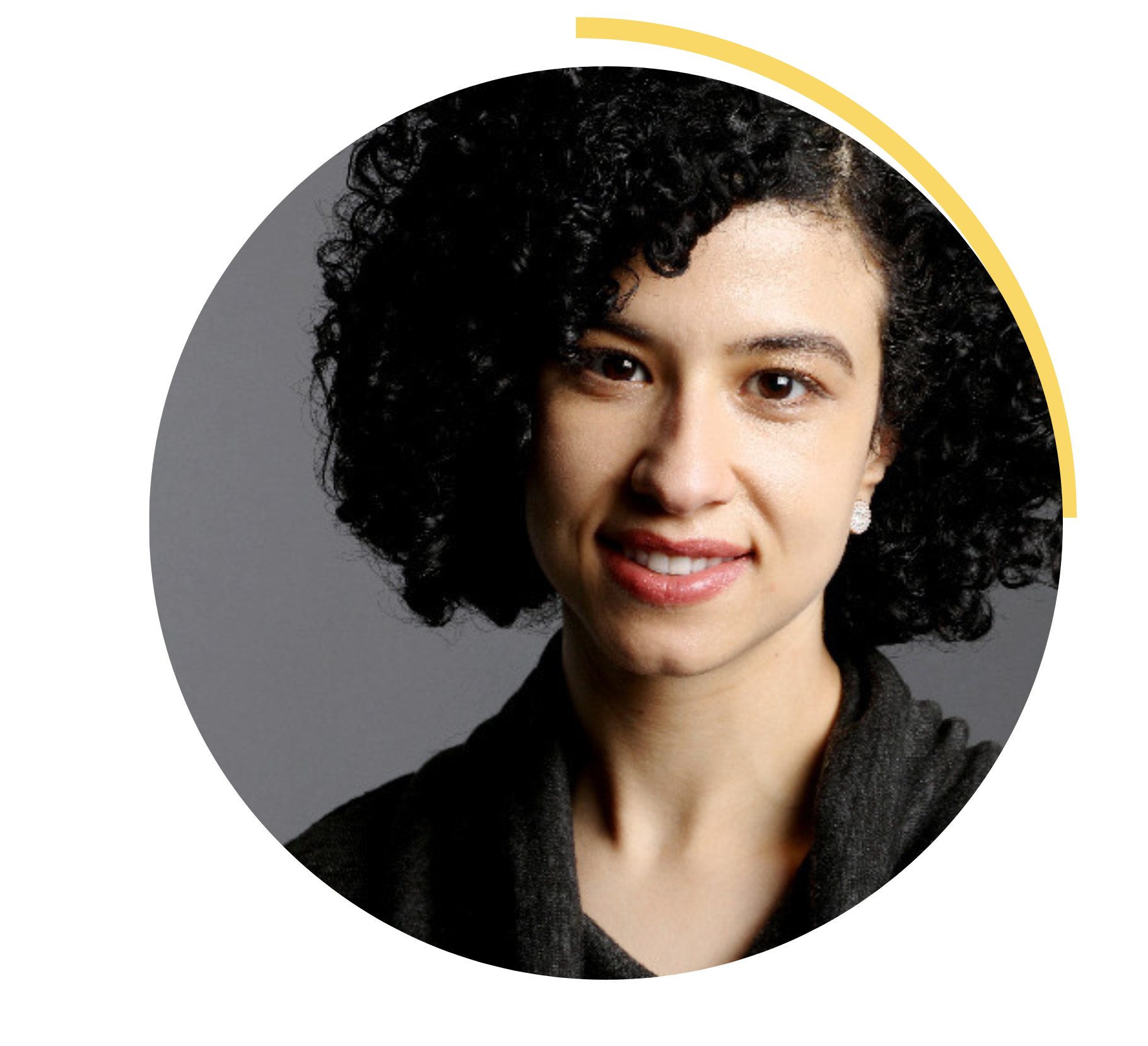
Dr. Sarah Shoker
Senior Research Scholar | UC Berkeley Risk & Security Lab
As a senior research Scholar at UC Berkeley Risk & Security Lab(BRSL), Dr. Shoker’s research focuses on testing and evaluation of human-AI teams in military decision-making, with a particular emphasis on measuring compliance with international law and civilian protection.
Dr. Shoker joined BRSL after almost four years at OpenAI as the lead of the Geopolitics Team and a member of the AGI Readiness and Product Policy Teams.
Related programs and courses
Gain exclusive access to the webinar recording!
Complete the form below to watch the full webinar on demand.
Questions?
Office hours: Monday to Friday, 8:30 a.m. - 4:30 p.m. ET
Learn more about the AI Certificate Program
Build future-ready skills in applied AI through hands-on projects, expert instruction, and real-world applications.
Is this webinar free?
Yes. This is a complimentary online webinar offered by WatSPEED at the University
of Waterloo.
Who should attend this webinar?
This session is designed for executives, business leaders, policy professionals, managers,
and anyone who wants to understand how AI is reshaping global power and what that
means for their organization, industry, or country.
Do I need prior AI or technical experience?
No. This webinar is designed to be accessible to non-technical audiences. The focus
is on strategic and geopolitical implications, not technical implementation.
What will I learn in this session?
You’ll gain a practical understanding of how AI is intensifying geopolitical competition,
reshaping warfare and diplomacy, enabling information operations, and creating new
governance challenges for organizations and governments alike.
What is meant by “the fog of war” in the context of AI?
The phrase captures how AI both creates and obscures uncertainty in conflict, competition,
and decision-making. Autonomous systems, AI-generated misinformation, and opaque algorithmic
decisions are making it harder than ever for leaders — in government, military, and
business — to assess situations clearly and act with confidence.
What is the US–China AI rivalry?
The United States and China are engaged in an intensifying race to lead in artificial
intelligence, spanning semiconductors, data infrastructure, military applications,
and global AI standards-setting. Export controls, technology restrictions, and competing
AI ecosystems are central features of this rivalry with far-reaching implications
for trade, security, and global governance.
How does AI relate to misinformation and information warfare?
Generative AI tools have dramatically lowered the cost and increased the scale of
producing convincing synthetic media, disinformation, and influence operations. State
and non-state actors are using these capabilities to manipulate public opinion, destabilize
democracies, and shape international narratives in ways that challenge traditional
detection and response.
What is technological fragmentation?
Technological fragmentation — sometimes called the “splinternet” — refers to the growing
divergence of national AI ecosystems, regulatory frameworks, and digital infrastructure.
As nations build separate AI stacks and impose competing standards, multinational
organizations face growing complexity in data governance, compliance, and cross-border
operations.
Is this webinar recorded?
Yes. A recording will be shared with registered participants after the session.
How long is the webinar?
The session will run for approximately 60 minutes, including time for audience Q&A.
How do I attend?
After registering, you will receive a confirmation email with the Zoom access link
prior to the event.
Does this webinar relate to a WatSPEED program or course?
Yes. This webinar introduces themes explored in WatSPEED's AI Governance and Risk executive sprint as well as AI Certificate Program, including courses on Agentic AI, Language Models, and the broader applied AI curriculum for those interested in building deeper expertise.